Choosing Non-Invasive Plants
Non-native plants play an important role in the economies of Ireland and Northern Ireland. Introduced for gardening, landscaping, horticulture and agriculture, many of these species provide significant benefits.
While most non-native plants do not cause problems, a small proportion have established in the wild and become invasive. These plants can spread rapidly, outcompete native species, disrupt habitats and reduce biodiversity.
For example, Rhododendron, one of the most damaging invasive species, was introduced as an ornamental plant to Irish gardens in the 18th century. It is now widespread across the island of Ireland, where it outcompetes native species and poses a significant risk to the health of our woodlands.
Unfortunately, with climate change there is even greater potential for more garden plants to become invasive and establish in the wild, threatening native species or habitats.
By choosing non-invasive plants for your garden or park, you can help protect our precious wildlife and natural habitats.
Choosing non-invasive plants for the island of Ireland
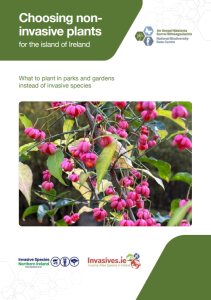
Developed by the National Biodiversity Data Centre with funding from the National Parks and Wildlife Service, Northern Ireland Environment Agency and the Shared Island Initiative, ‘Choosing non-invasive plants for the island of Ireland’ aims to help gardeners and landscapers avoid harming the environment.
The guide, written by Edwina Cole and Noeleen Smyth, comprises 15 sections covering different plant uses, including hedging, ground cover and ponds. Each section highlights invasive plants that should be avoided and provides multiple alternatives that currently show no signs of invasiveness across the island of Ireland or elsewhere in Europe.
The guide highlights species that are regulated in both jurisdictions and at EU level. It also draws attention to species that are not currently regulated but exhibit invasive traits or have the potential to become invasive.
The alternatives include both ornamental and native plants, with most offering the additional benefit of being wildlife-friendly by providing food and shelter for pollinators and birds.
Loading Viewer...
Web Version
Print-ready version available on request. Please email [email protected]