Non-native (also known as alien) plants play an important role in the economies of Ireland and Northern Ireland. Introduced for gardening, landscaping, horticulture and agriculture, many of these species provide significant benefits.
While most non-native plants do not cause problems, a small proportion have established in the wild and become invasive. These plants can spread rapidly, outcompete native species, disrupt habitats and reduce biodiversity.
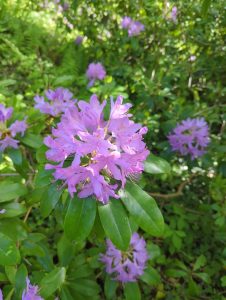
For example, Rhododendron, one of the most damaging invasive species, was introduced as an ornamental plant to Irish gardens in the 18th century. It is now widespread across the island of Ireland, where it outcompetes native species and poses a significant risk to the health of our woodlands.
Unfortunately, with climate change there is even greater potential for more garden plants to become invasive and establish in the wild, threatening native species or habitats.
By choosing non-invasive plants for your garden or park, you can help protect our precious wildlife and natural habitats.
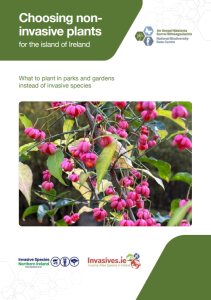
Developed by the National Biodiversity Data Centre with funding from the National Parks and Wildlife Service, Northern Ireland Environment Agency and the Shared Island Initiative, ‘Choosing non-invasive plants for the island of Ireland’ aims to help gardeners and landscapers avoid harming the environment.
The guide, written by Dr Edwina Cole and Dr Noeleen Smyth, comprises 15 sections covering different plant uses, including hedging, ground cover and ponds. Each section highlights invasive plants that should be avoided and provides multiple alternatives that currently show no signs of invasiveness for the island of Ireland or elsewhere in Europe.
The alternatives include both ornamental and native plants, with most offering the additional benefit of being wildlife-friendly by providing food and shelter for pollinators and birds.
As part of the launch for this new guide, Kate Moore, Invasive Species Engagement Officer at the National Biodiversity Data Centre, said: “I am delighted to share this valuable resource for gardeners. Whether you are looking to plant a hedge, bulbs or add plants to ponds. There are plenty of great options to choose from. By choosing non-invasive plants for your garden, you can help protect our precious wildlife and natural habitats.”
Dr Noeleen Smyth, Director of the National Botanic Gardens, said: “It was a pleasure to work with Dr Edwina Cole and the Invasive Species Team, Kate Moore and John Kelly, at the National Biodiversity Data Centre. The plants we selected in the guide have been in cultivation for many years at home and abroad and show no signs of invasiveness. We also highlight species that are regulated invasive alongside those that we have noted as becoming weedy and spreading in Ireland. We suggest these are not used in our gardens and landscapes going forward.
If we had the chance to turn back time and remove Rhododendron ponticum and its hybrids from our landscape before they took over habitats across the island of Ireland we would have been glad of it and we would have saved millions in management efforts.
This guide will help inform our garden and landscape planting so that we do not end up in a similar situation with other garden species that we see becoming weedy species in the wild such as Cherry laurel, Wall cotoneaster, Spanish bluebell. We can all prevent these from becoming widespread across the island of Ireland.”
This free guide was published by the National Biodiversity Data Centre with funding from the National Parks and Wildlife Service, Northern Ireland Environment Agency and the Shared Island Initiative.
To download ‘Choosing non-invasive plants for the island of Ireland’ visit: https://invasives.ie/alternativeplants/
NOTES TO EDITOR:
Impacts of Rhododendron
- Habitat Smothering and Shading: Mature thickets grow up to eight metres tall, blocking sunlight from reaching the forest floor and preventing the regeneration of native trees, ferns, and ground flora.
- Soil Acidification: Its leaf litter decomposes slowly and increases soil acidity, making the micro-environment hostile to native plants.
- Allelopathic Toxins: Roots and leaves release chemical compounds that inhibit the seed germination and growth of neighbouring plant species.
- Loss of Native Fauna: Dense stands displace native birds, invertebrates, and mammals that rely on native woodlands.
- Pathogen Reservoir: The plant acts as a host and vector for Phytophthora ramorum, a destructive water-mould pathogen that causes Sudden Oak Death and kills valuable tree species.
- Aquatic Harm: Thick root systems and dense canopy coverage degrade streams, rivers, and wetland bog habitats, harming fish and aquatic invertebrate communities.
CONTACT:
Interviews are available with Kate Moore, Invasive Species Engagement Officer, National Biodiversity Data Centre
INVASIVE SPECIES
Invasive species are one of the greatest threats to our biodiversity and habitats.
Invasive species are species whose introduction and/or spread by human action outside their natural distribution. They threaten biological diversity, food security, and human health and wellbeing.
About the National Biodiversity Data Centre
The National Biodiversity Data Centre works to ensure that the value of biodiversity to society and human wellbeing is recognised. We make data and information on Ireland’s biodiversity more easily accessible to better understand and inform its protection and restoration. The National Biodiversity Data Centre manages thematic work programmes and plans to support the implementation of aspects of biodiversity policy. One of the key work programmes is around invasive species. The National Biodiversity Data Centre is a Company Limited by Guarantee with Charity status.
To find out more about our work, please visit:
Invasive Species in Ireland: invasives.ie
Northern Ireland: invasivespeciesni.co.uk
National Biodiversity Data Centre: biodiversityireland.ie